Not every investment needs justifying in basis points. Some are made to grow wealth; others simply to bring something good into one’s life. Fine wine – if well sourced and well kept – can do both, but its first return is rarely the financial one. This week, we look at the dividends a great collection pays long before it is ever sold, and why the discipline behind it still matters.
Joy
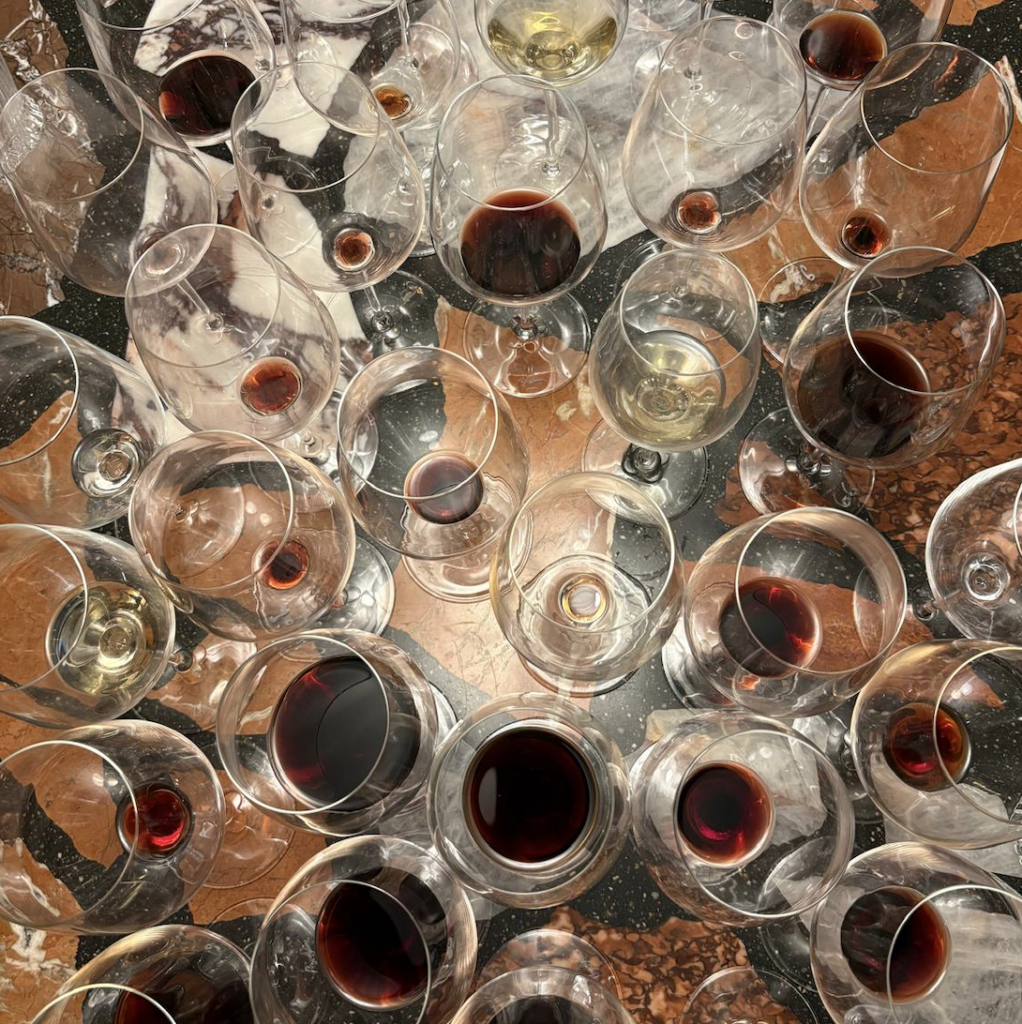
First and foremost, wine is made to bring joy. A great bottle’s dividend is the evening it is opened: the friends around the table, the vintage that matches a birth year, the conversation it starts. Nobody measures that, and nobody needs to. Pleasure compounds in its own way, too. A wine bought young and followed over the years becomes a story its owner tells with real fondness. Few assets give their owners as much to look forward to.
Nowhere is this clearer than in Burgundy. In recent years, some of the world’s wealthiest collectors have paid extraordinary sums for tiny parcels of vineyards, taking some of the region’s finest wines largely off the open market. On paper, the logic is thin: if a warming climate changes what Pinot Noir can achieve there over the next twenty years, the land itself carries real risk. Yet they buy all the same, because they love wine, and owning a piece of Burgundy brings a joy that starts today.
Pride
No matter the regional focus, a great collection is naturally a source of pride. Each vintage is a fixed expression of a single year, and its stock only shrinks with time. Every bottle that reaches maturity does so because someone stored it well, verified where it came from and had the patience to wait. Without that care, the bottle is lost: counterfeited, damaged by heat in transit, or opened a decade too soon. A collector who keeps a great wine safe keeps a vintage alive for the table it was made for. Buying for pride and joy – our own, and that of the people we share it with – is among the most rewarding investments one can make.
Is there a right time?
Buying for joy is not about timing the market, but a good entry point makes a collection all the more satisfying. After fine wine’s longest downturn, prices are back to pre-Covid levels. In September, Michael Burry made the case for buying now, describing European fine wine held in bonded storage as a short position on the US dollar. We agree with the direction, with one important caveat: this is not the time to buy everything. Discounts are uneven, and a lower price is not the same as solid intrinsic value, or a good investment case.
1275’s approach
Whether a collection is built for pride, joy or both, the discipline behind it should be the same. 1275 sources directly from the estates, with full traceability, so every bottle’s history can be verified and proven. We take each acquisition extremely seriously, because the care taken at purchase is what secures the dividends later, whether they are poured at the table or realised on exit.